Ireland’s Easter Rising took place over 100 years ago, so one could be forgiven for assuming that all those who lived through it are now long gone. Interestingly enough that assumption is wrong. Father Joseph Mallin was only two when his father was executed by the English for being one of the leaders of the insurrection. Today he is 104, and as of this writing he is not only still alive, but he is also still fighting to set the records straight about his father.
Tag Archives: Irish history
Exhibit Down

The Museum of Free Derry has temporarily removed its most controversial exhibit and Linda Nash and Helen Deery have brought their around-the-clock protest inside the museum to a close. All parties will meet again next week with a mediator to negotiate how to proceed when it comes to the exhibit that was created to remember the victims of the Troubles from Derry.
The Occupied Museum of Free Derry

The newly revamped Museum of Free Derry has been mired in controversy since before its doors reopened. At issue is an exhibit that includes the names of all the people who were killed in the area during the Troubles. This seems harmless except that the names of British soldiers and police officers are also there, right alongside many innocent victims who were killed by those very same squads. The decision to include those names may seem reasonable from a purely educational viewpoint but the Museum underestimated the emotional response from locals who lost friends and family members during the conflict. For some of them, the inclusion of these government contingents is an affront to the memories of their loved ones and a blatant disregard for their own feelings and their continuing fight for answers and justice.
The Harp Bar Bombing
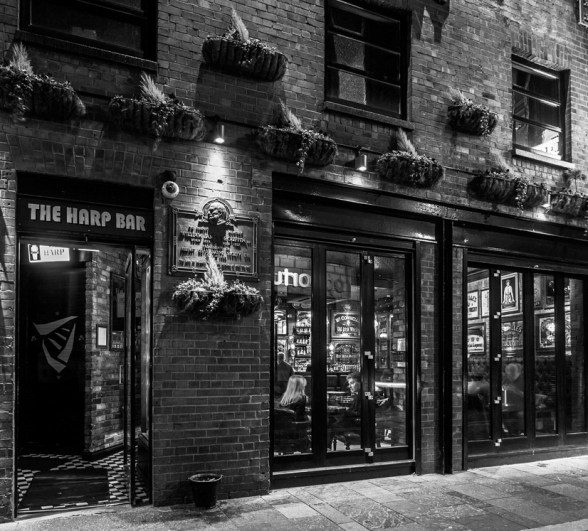
On this day in 1975, John ‘Sean’ Doherty and Denis McAuley were murdered by a bomb that was thrown into the Harp Bar in Belfast. Given the giant explosions of the time period, it was a relatively small attack but it resulted in two deaths and multiple injuries. It was also the second attack on the centrally-located Harp in only ten days.
Our Fenian Dead

“They think that they have foreseen everything, think that they have provided against everything; but, the fools, the fools, the fools! — They have left us our Fenian dead, and while Ireland holds these graves, Ireland unfree shall never be at peace” – Patrick Pearse
This passionate call to arms and declaration of war was delivered by Patrick Pearse at the graveside of Jeremiah O’Donovan Rossa. It is one of the most famous speeches in Irish history and O’Donovan Rossa’s funeral was a show of military might, a genius stroke of propaganda created by the Irish Republican Brotherhood, and one of the catalysts that led to the Easter Rising in 1916. It took place on this day in 102 years ago.
Kitty Kiernan

Ireland has many tragic love stories in its history and one of them is the tale of Kitty Kiernan and Michael Collins. Kitty was desperately in love with Collins and more than eager to marry him. They planned a double wedding with Kitty’s sister and her groom, but fate intervened and Collins was assassinated before the wedding could take place. A few months later on what would have been her wedding day, Kitty arrived at her sister’s celebration wearing black from head to toe. Collins’s death would affect Miss Kiernan for the rest of her life.
Sorcha MacMahon
Over the last few years interest in the roles that women played throughout Irish history has finally picked up. We now know that there were far more women who took part in the Easter Rising than previously thought. Estimates have put their numbers anywhere from seventy-seven to several hundred and many are finally getting the recognition that they have deserved for so long. Sorcha MacMahon was one of those women and without her, the 1916 uprising may have been very different indeed.
Flames of Fear

The North of Ireland is a complicated place – especially in July. Every year makeshift towers of debris, old tires, and wooden pallets reach higher and higher into the sky. They are decorated with sectarian slogans, political effigies, Irish flags (or Ivory Coast ones, since some can’t tell the difference between the two), and serious threats against Catholics, opposing politicians, Irish men and women, minorities, and the gay community. These dangerous displays are what they call culture this time of year and they are a horrifying example of the division that continues to exist in the North.
Piaras Béaslaí

Piaras Béaslaí may have been born in England, but that didn’t stop him from being profoundly Irish. His Irish Catholic parents emigrated to Liverpool before Piaras was born but he grew up with a strong love for his heritage. By the time he was a teenager he was fluent in Irish and obsessed with Ireland’s struggle for independence. He wrote fiery newspaper articles and rebellious poetry that highlighted the Irish Republican cause and eventually led him into the Gaelic League and the secretive Irish Republican Brotherhood. He developed close friendships and worked side by side with many prominent revolutionaries like Ned Daly, Thomas Ashe, and Michael Collins, just to name a few.
Lily O’Brennan
 On this day in 1948, Ireland said goodbye to one of its fierce and famous daughters. Elizabeth “Lily” O’Brennan was a famous writer and one of three revolutionary sisters in the O’Brennan clan. She was a true believer in the cause of Irish freedom and she fought for it even when it cost her her own.


You must be logged in to post a comment.